Wednesday, July 2, 2014

Stolen from the Tombs


A long time ago, in a dynasty far, far away, there was Ibrahim Pasha. He was born in 1789, the son of the Egyptian ruler Mohamed Ala, and died in 1848 as king of Egypt. He spent most of his life since adolescence as a military leader in his father’s kingdom and eventually became the supreme political leader although he died just 4 months after succeeding the throne. He was made Regent of Egypt when his father Mohamed became senile in his old age, but Pasha at the time was unhealthy himself due to his long career as a soldier and in the end died before his father. As a military leader and ruler, Pasha was respected and admired by his people and is remembered as one of the greatest leaders of the Mohamed Ala Dynasty regardless of his short reign. He is even honored with a monument in the Egyptian capital of Cairo. Most of Pasha’s acclaim comes from his military victories over the Ottoman Empire, Syria, and other surrounding territories during his time spent as chief commander of the Egyptian Army.


 Here at the Baldpate we have the key to the crypt in which Ibrahim Pasha’s body is buried, and as can be expected with Egyptian tombs, the building is even more historic than the man. The crypt is located in the Tombs of the Califs which dates back to 600 A.D. and is the resting place of all the royal family of Egypt. The two photographs that share a frame with Pasha’s key depict the beautiful Tombs of the Califs as well as the monument that represents Ibrahim Pasha in Cairo.


This key was acquired, and probably stolen, by a man named Richard Spencer in 1937. Spencer was an exchange student from Stanford University studying in Canton, China, but when his University in China was shut down as a result of World War II, he took the scenic route back to the United States through Singapore, Port Said, Egypt, and Europe. While he was in Egypt, the accompanying letter says he took this key out of the lock on Pasha’s crypt and apparently made it through customs without any trouble. I imagine security was slightly more relaxed back in the day.

So there you have it, a historic key brought from an exciting adventure around the world. Any of you who may be planning an overseas trip, remember to keep your eyes pealed for unattended keys looking for a new home. Or just plan a trip to Baldpate to enjoy the spoils of others.

If you are in the Estes Park area, please consider paying us a visit tonight at 7pm to hear Richard Thompson speak about living with Grizzly bears and enjoy some fresh baked cookies. Also if you plan a trip for next Wednesday, you’ll hear Jake, one of our very own curators, speak about 10 of the most exciting keys in our collection. You won’t want to miss it.

Happy key hunting!

Rachel
Key Room Museum Curator

Tuesday, July 1, 2014

Sailing the Seven Seas

Ahoy! While it never did catch on for Alexander Graham Bell on how to answer the telephone, it was a very typical greeting to sailors as well as for the start of this blog as we will be exploring the history of a ship that has sailed the seven seas. Now if the previous sentence had anyone excited about reading about pirates and the like, I am afraid I must disappoint and instead tell you about a ship that has a checkered history and significance to our key collections’ ship section.

In the year of 1887 a ship was built in the Port of Glasgow, Scotland and set sail from Liverpool, England and was called the Kenilworth by the owners. The J. Reid and Company ship was a four mast ship that spanned just over 300 feet long and able to carry a total of 2293 tons. This ship that started out with so much potential and promise, however, was doomed for difficult times.

Its maiden voyage was a success, traveling from San Francisco to Newcastle in 41 days. And even her second voyage was profitable as well, sailing from Liverpool to San Francisco in 128 days. Sadly, the perfection of her first two voyages was met with disaster in the harbor of San Francisco. In August of 1889, a warehouse near the docked Kenilworth caught fire and the fire spilled over onto the ship. While still remaining fairly well intact, the ship was considered a constructional loss and was sold to the A. Sewall and Co. from New York.

It cost them $45,000 to repair but very quickly she was back to her hauling of cargo all over the world under the command of Captain J. Baker. For almost 6 years the ship had little difficulty with the tasks she was given. Her crew however had other plans. In 1895, the crew mutinied against the captain, first mate, and second mate. They set fire to the ship and the captain and the first mate suffocated in their rooms. The second mate was kept alive since they were in the middle of the ocean and J. Generaux was the only man left that understood navigation. This mutiny did not last long for when they set to port in Valparaiso, Chile the mutineers were punished and the ship was then sent on under Captain Murphy to its original destination in New York.

More than a decade later with only minor difficulties, the Kenilworth was sold to the Alaska Packer’s Association and renamed the Star of Scotland in 1908. For twenty-two years the Star of Scotland carried canned salmon back and forth to Alaska. The ship withstood valiantly under the extreme weather conditions of the Northern Pacific and Bering Sea. It was after this time that the key to the captain’s quarters was sent here to the Baldpate Inn and where it has been on display ever since.

This was not the end for the ship. Once again renamed, this time Rex, in the 1930s by a gangster known as Tony Cornero. For several years it was used as a casino off of the coast of Santa Monica, California before being shut down in 1940 and commissioned as the Star of Scotland as a cargo ship until being sunk on November 13th, 1942 by the German submarine U-159. As the donator of the key to this mighty ship’s captain’s quarters wrote in the letter to us, “If this key could talk it could tell interesting tales of tempests, shipwreck, mutiny, and hardships. It could also tell tales of tasks well done, as this vessel sailed the seven seas, carrying cargoes to all parts of the world, and her life history has been quite unusual.” With so many wild tales of the seven seas, we here at the Baldpate Inn feel very blessed to have such a unique key in our collection.

A further reminder for those that will be in Estes Park, Summer Enchanted Evenings is tomorrow night at 7 pm with Dick Thompson speaking about Life with the Grizzly. Also I am nearly prepared to present ten of the most famous keys in the Key Room the following Wednesday, July 9th, at 7 pm. Both are expected to be very interesting evenings and I hope those in the area will turn out and be open to a unique educational experience.
Until next time,
Jake
Key Room Curator

Sunday, June 29, 2014

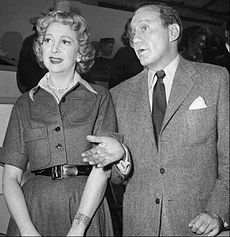
Jack Benny and Mary Livingston

Hello, everybody!

Today is another beautiful day here at the Baldpate Inn! I've had some great conversations in the Key Room today, and I hope that I'll have the opportunity to talk to all of you soon. Between conversations, I've been trying to decide which key to blog about. As I was thinking about it, I was listening to the radio play version of Seven Keys to Baldpate, which plays on repeat in the Key Room. I've listened to this show many times, and I never get tired of it! In all honesty, it is a great show, starring some great actors.
Two of the actors whose voices are featured in the radio play include Jack Benny and Mary Livingstone. We actually have a key in our collection that was donated by Benny and Livingstone. The key is to Jack Benny's Paramount Studios dressing room. On the tag, he wrote, "Jello again, and here's a key to health for every Baldpate Inn visitor." Mary Livingstone wrote, "Me too." I know Benny's and Livingstone's voices very well, but I didn't know that much about their life stories; therefore, I would like to share a little bit of what I have learned about these two Baldpate legends.

Jack Benny was born as Benjamin Kubelsky in 1894 in Illinois. Benny learned to play the violin at an early age and found work in theatre orchestras. He became a vaudeville performer when he was a teenager, teaming up with pianist Cora Salisbury. He had the oportunity to tour with the Marx Brothers, but his parents would not let him go on tour at 17 years old. Benny's comedy career began during World War I when he was assigned to the Great Lakes Naval Training Centre. He used to try to entertain the men with his violin, but he did not receive a lot of appreciation from them. At one point, his friend whispered, "For heaven's sake, Ben, put down the damn fiddle and talk to 'em." Then, Benny told a joke that truly entertained the men.

Benny continued to make vaudeville performances after the war and began using the name "Jack Benny". He made his first radio appearance on Ed Sullivan's interview show on March 29, 1932. Within a year of this interview, Benny became a radio star. He starred in The Canada Dry Program, The Jell-O Program, and The Lucky Strike Program. Jack Benny eventually starred in his own television show, The Jack Benny Show. Benny even starred in Hollywood movies; although, his film appearances were largely poorly received. His movies include The Hollywood Revue of 1929, The Medicine Man, and To Be or Not To Be.

Jack Benny met Mary Livingstone while he was appearing in the Orpheum Theatre in Los Angeles, and they were later married. They had one daughter, Joan Naomi Benny, and remained together until the end of his life. Benny died of cancer on December 26, 1974. He suffered for a short time before his death, but he continued to perform. After his death, a red rose began appearing at the Benny home every day. Eventually, Mary asked the florist about this. Apparently Jack Benny had been purchasing flowers one day and said, "If anything should happen to me, I want you to send my Doll a red rose every day." Mary received these roses until the day she rejoined Jack.

I hope you enjoyed today's blog! Please comment if you have more information you would like to share about Jack Benny and Mary Livingstone.

Have a great day!

Margie
Key Room Museum Curator


Saturday, June 28, 2014

The Key to Musical Genius


Many have been considered great when we think of composers and artists in the music industry, yet there are some that have been more impactful than many of the artists that we consider great in our time period. One of these more impactful names in the world of music is that of Wolfgang Amadeus Mozart. It is my great pleasure to discuss the key in our collection that is related to such a musical visionary as Mozart, especially since we have the key to his wine cellar in Salzburg, Austria.

Wolfgang was born on January 27th in 1756 to Leopold Mozart and Anna Maria in Salzburg, Austria. He was only two of seven children to the Mozart parents that actually survived into adulthood with the other five never surpassing infancy. His father was a minor composer and appointed to be the fourth violinist in the musical company for Count Leopold Anton von Firmian, the ruling Prince-Archbishop of Salzburg in 1743.

Even early on, his older sister Maria Anna recalled that he was able to pick out thirds in scale as well as by age five being able to compose as his father wrote the notes down. His father was a great encourager of Wolfgang’s talents and soon focused primarily on teaching his children and gave up composing. While he and his sister were still very young, Leopold took them on several different European excursions in which Wolfgang and Maria Anna would perform as child prodigies for a plethora of dignitaries in a variety of cities including Munich, Paris, London, Zurich, and even parts of Italy.

In 1773 Wolfgang was employed as a court musician in Salzburg until 1777 when he resigned and looked for different work but unfortunately could not find a position to his liking and fell into debt. During this traveling period of Mozart’s life, his mother died on July 3rd 1778. He returned home in 1779 and took a position as a court organist and concertmaster. This was not to last long, however, for in 1781 he set off again, this time for Vienna.

When visiting his employer in Vienna he actually tried to resign his post and was refused, but then granted permission of dismissal and he settled in Vienna as a freelance performer and composer. There became a dispute due to him leaving the court of the Archbishop in Salzburg and it ran deeper than just being dismissed because Leopold Mozart sided against Wolfgang on the matter. When he did not return with the Archbishop it was considered the revolutionary step for Mozart, one that drastically changed his career.

It was in Vienna where he pursued Constanze Weber ,and the couple married in 1782, the day before his father’s letter of consent arrived in the mail. The Mozart couple had a total of six children over the next nine years with only two of them surviving infancy. A year after their marriage they visited Salzburg and prompted one of the more famous pieces by Mozart, Mass in C Minor, with his new wife singing one of the solo parts. In Maynard Solomon’s book, Mozart: A Life, he says this about Mozart’s time in Salzburg, “a harmonious connection between an eager composer-performer and a delighted audience, which was given the opportunity of witnessing the transformation and perfection of a major musical genre.”

It is here where our key comes in. Due to its unique nature and origin the key to Mozart’s wine cellar is quite rare in our collection. It is said that the wine cellar was given to Mozart as a gift since he was a popular visitor to the wine cellars made by the priests. During the early stages of his career as he became up and coming, Mozart was a prodigy and it seems that due to the already small amount of stature his father had acquired in Salzburg, Wolfgang was able to break through and this, his birthplace, was proud to call him one of their own. So when he returned and during the composing of Mass in C Minor, the citizens of Salzburg gave this key and the wine cellar it opened to him.

Over the next several years he created some of the most inspirational and genre-changing music that has ever graced the earth’s inhabitant’s ears, and yet life was cut short. At the age of 35, Mozart fell ill and while being nursed by his wife and daughter, wrote his final masterpiece, Requiem. He died on December 5th, 1791 and was laid in a commoner’s grave. While having changed how so many look at music and composing, Mozart had a glimpse of fame during his lifetime. In death, however, he inspired and continues to do so. Even I, a very amateur musician, have found the power of his music lifting and even can bring me shivers down my back if performed eloquently. I hope that this brief piece can induce a curiosity to look up and listen to some of his compositions.

Once again I will make a note here at the end that on July 9th I will be presenting ten of some of the more famous keys in our collection during the Summer Encahnted Evenings at 7 pm. I hope that many of you are able to come out and enjoy the variety of history we have here in the Baldpate Inn Key Room.

Until next time,
Jake
Key Room Curator

Friday, June 27, 2014

S St. Vrain Highway


Good to see you again Key Room readers,

I have another key to share with you on this lovely Friday afternoon, and I hope you enjoy it.

Today’s key is a piece of local history that we are proud to have as a part of our key collection. It is the key to the transit box used in the surveying of the South St. Vrain Highway in Estes Park. If you have visited Estes Park at all you have probably driven on this road once or twice. I use it every time I leave the Inn and venture into town. The highway was constructed during the 1920s and is now part of Colorado State Highway 7 which happens to be home to the Baldpate Inn and many other beautiful locations in Northern Colorado.

The picture above shows part of the survey team that worked on the highway back in the early 20th century when surveying required different tools than a computer and a satellite. It’s thanks to their hard work and the hard work of many others that Estes Park has become the town that it is today. Road service in the early 20th century brought many more tourists and visitors to the Estes Park area and many of those visitors decided to stay and contribute to community. And who could blame them? The South St. Vrain Highway allowed many people to come and fall in love with Estes Park and it continues to do the same today.

Here in the Baldpate Key Room we have a whole section devoted to Colorado state history so if you’re interested in how this great state has grown to be what it is today then come by and see for yourself. We’d love to have you,

Rachel
Key Room Museum Curator

Thursday, June 26, 2014

Ford Model T

Hello, everybody!

Today, I'm going to talk a little bit about cars, even though I am far from being an expert on this topic. I'm preparing for my presentation on July 30 here in the Key Room as part of our Summer Enchanted Evenings. In case you don't know, we have different people come and speak about various topics here at the Baldpate every Wednesday night at 7:00 pm. We would love for you join us every week for an hour of entertainment! Anyway, I will be giving a presentation at the end of July about some of our keys and photos that relate to Hollywood. One of the movies that I'm going to talk about in my presentation is American Graffiti. This movie features some of the best music and coolest cars from the 1960s and earlier. One of the cars used in the movie is the Ford Thunderbird, a beautiful car driven by a beautiful girl. The movie features other Ford vehicles as well. Our photo collection here at the Baldpate includes a photo of the man who started it all, Henry Ford. Not only is Ford part of our photo collection, but I discovered today that we have two keys from Model Ts in our key collection.

We have a fun option in the Key Room for visitors to complete a scavenger hunt, and one of the Model T keys is included in the scavenger hunt. This key can be found in the Michigan section of keys on our ceiling, and the other Model T key can be found in the Kansas section. We can identify the keys as keys to Model Ts because of their wavy blades and diamond shaped handles. The numbers on the keys are 52 and 74, and these numbered keys were used between the years 1919 and 1927. For example, the key with the number 52 on it would have been used for any Ford with a number 52 lock. Interestingly, one of the keys has the Ford logo on it while the other key does not.

I want to talk now a little bit about Henry Ford and the Model T. Henry Ford was always interested in making vehicles and was willing to take any risk to start his own company. His first two companies failed, but his third automotive company, Ford Motor Company, was a success. He was able to hire a group of capable men who believed in his vision. The company's first vehicle, the Model A, was followed by improved models. In 1907, Ford's Model N became the best selling car in the country, but Henry Ford was dreaming of a car that was better and more affordable. He came up with the Model T, which was introduced in 1908.

The Model T was easy to operate, maintain, and handle on rough roads. The car was very successful, and Ford was able to sell every one that he made. He wanted to be able to make enough cars for everyone who wanted to buy one, which was the inspiration for the assembly line. The company moved to a huge plant in Michigan in 1910, and the Ford team borrowed ideas from watch makers, gun makers, bicycle makers, and meat packers in an attempt to create a way to increase production. By late 1913, the team had developed the moving assemply line. Employees were not pleased, though, with the repetitive work, and the company had to hire 53,000 people a year to keep 14,000 jobs filled. Henry Ford solved this problem by doubling his employees' wages. The price of the Model T dropped, and sales rose steadily. By 1922, half of the cars in America were Model Ts.

I hope you found this interesting, and I hope you can come in July to my presentation about Hollywood keys. If you have more information about Henry Ford or the Model T that I should know about, please leave a comment.

Have a great day!

Margie
Key Room Museum Curator


Sunday, June 22, 2014

The Key to Becoming a Famous Outlaw


While none of us grow up without knowing too many names of famous criminals, one name should always spark the interest of the American mind. If it doesn’t then I hope to enlighten any reader on the name of one famous outlaw that has a connection to the Baldpate Inn Key Room, and that is Jesse James. While never actually staying here, or even owning the key that is connected to him here, the key to the Old Southern Bank of Kentucky in Russellville, KY would not soon forget, since it was robbed by the famous outlaw and his gang in 1868.

Jesse James is a man from a stereotypical upbringing during the mid-19th century. Born on September 5, 1847 to Robert S. James, a farmer and Baptist preacher, and Zerelda Cole James, he knew his father for only a short time before Robert James went west to minister to the gold miners in California. He had two full siblings, Alexander Franklin “Frank” and younger sister, Susan Lavenia, and four half siblings after his mother married twice after the death of Robert James.

As the years went by living in the state of Missouri was increasingly difficult since it was a border state as the United States increased in hostility and polarized into the North and South. Since the population was nearly 75% Southern born, animosity grew increasingly and lead to militia groups on both sides attacking, making Missouri a dangerous place to grow up in. This style of fighting, which has been classified as guerrilla warfare, gripped most of Missouri throughout the 1850s and even through most of the Civil War. Jesse’s older brother Frank joined a group known as the Drew Lobbs Army and then later was identified as a member of a different guerrilla warfare group that led Union militia soldiers to search and raid the James-Samuel farm, even torturing Reuben Samuel and, according to rumor, Jesse as well.

In 1864, Jesse joined his first outlaw squad under the leadership of Fletch Taylor, but soon after Jesse and Frank James joined a group under the command of Bloody Bill Anderson. During that summer it is reported by the local marshal that Jesse and Frank James were part of the Centralia Massacre where 22 unarmed Union soldiers were killed. After some time the brothers separated and had their own adventures, Jesse was even mortally wounded twice during the absence of his brother.

Over the next several years Jesse James became more prominent. In 1866 he and Frank met up with Cole Younger and began to plan several bank robberies as they also recruited to their gang. This is where the key from our collection comes into the scene. While being reported as the first bank ever robbed by Frank and Jesse James, there are several reports that state that they had robbed a couple of banks before reaching the Old Southern Bank of Russellville, KY including the Clay County Savings Bank in Liberty, Missouri and the Alexander Mitchell and Co. Bank in Lexington, Missouri. Yet this is one of the first banks that were ever robbed by the brothers and their gang, which gives significance to this place and to the key that is from it. Now our information that was given to us by the donator of the key to this bank in Russellville, KY says that there was $17,000 stolen, yet according to my research I have found that they got away with as much as $14,000. Either way this was a good haul for them and continued to help propel them towards infamy.

Jesse and Frank James soon became famous with their crimes and evasion of the law. Rewards were posted for them at $5000 dollars a piece by different companies in the state of Missouri but not any by the government since there was a bar on the governor from seeking a suitable reward for their capture. By this time many of the original members of the James-Younger Gang were dead and so recruiting was required to keep up the nomadic and reckless lifestyle that Jesse James had become accustom to by the late 1870s. These recruits however were not battle hardened as were the original members and it made it difficult for Jesse to trust them by 1882, he trusted only two but should have trusted none. On April 3, 1882 while getting ready to go out for another robbery, Charley and Robert Ford prepared the horses. In a moment of weakness and trust, Jesse James turned his back to adjust a picture on the wall and was shot in the back of the head by Robert Ford.

Thus ended the life of Jesse James, but it did not end the legend. Jesse James was already famous during his lifetime, his death sky-rocketed him to the spotlight of notorious outlaws and rightfully so in my opinion. The story of his life has been recounted in many aspects ranging from reenactments and TV shows to literature, comics and even plenty of movies. During one traveling adventure out west, Oscar Wilde wrote this after visiting Jesse James’ hometown in Missouri, “Americans are certainly great hero-worshippers, and always take heroes from the criminal class.” This seems to definitely be true in the case of Jesse James. While being a person with little morality, he is still a fascinating individual to research.

I would like to conclude the post today with a reminder that this Wednesday at 7pm, we will once again be having Summer Enchanted Evening with guest speaker, Pat Washburn, whose topic is called “The Other Mills Brother.” Also looking ahead a little further, I will be speaking on July 9th focusing on 10 of the most famous keys and their history, so I would love for people to come out for that event.

Until next time,


Jake
Key Room Curator